A10560 | Photographs (I)
时间限制1s
内存限制256MB
通过 / 提交0/0
题目描述
The Human-Cow Confederation ( $HC^{2}$ ), led by Heidi, has built a base where people and cows can hide, guarded from zombie attacks. The entrance to the base is protected by an automated gate which performs a kind of a Turing test: it shows the entering creature a photograph and asks them whether the top and bottom halves of this photograph have been swapped or not. A person (or even a cow) will have no problem answering such questions; on the other hand, a zombie would just randomly smash one of the two buttons.
The creature is asked a series of such questions. If at least $75%$ of them are answered correctly, the gate is unlocked; otherwise, a side door opens, beneath which a huge fan is spinning...
Heidi is now building a robot army to fight the zombies, and she wants the robots to also be able to enter the base. You are tasked with programming them to distinguish the images.
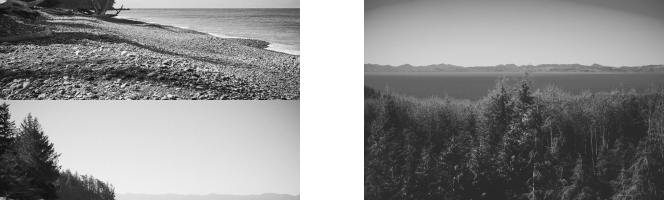The first two images from the test set. The first picture has been rearranged, but not the second.
The creature is asked a series of such questions. If at least $75%$ of them are answered correctly, the gate is unlocked; otherwise, a side door opens, beneath which a huge fan is spinning...
Heidi is now building a robot army to fight the zombies, and she wants the robots to also be able to enter the base. You are tasked with programming them to distinguish the images.
The first two images from the test set. The first picture has been rearranged, but not the second.
输入格式
The first line of the input contains the number $q$ of questions ( $1<=q<=220$ ). After that, $q$ questions follow, each of which in the format described below.
The first line of every question contains two space-separated integers $h$ and $w$ ( $1<=h,w<=600$ ) – the height (number of rows) and width (number of columns) of the photograph. (Most photographs are roughly $200×300$ .) After this, $h$ lines follow, each describing a single row of the picture. The picture is monochrome (in shades of grey). Its $i$ -th row is described by $w$ space-separated integers $a_{ij}$ ( $j=1,...,w$ ), where $a_{ij}$ is the brightness of the corresponding pixel ( $0<=a_{ij}<256$ , where $0$ is black and $255$ is white).
Each picture will be either a real-life photograph, or a real-life photograph which has been broken up into two pieces and rearranged. More precisely, in the latter case, the topmost  rows have been moved to the bottom of the picture. It is guaranteed that $h$ is even.
There is only a single input file to be processed, called all.in, and it is downloadable from the online judge. You are also a given another input file, called sample.in, which contains the first $20$ pictures from all.in; you are provided the correct answers for sample.in in sample.out. You are also given a directory easy\_bmp, which contains the first 50 input photographs in the form of .bmp image files, as well as a directory easy\_sample\_original\_bmp, which contains the first $20$ images before rearrangement. Check the notes for the download links.
The first line of every question contains two space-separated integers $h$ and $w$ ( $1<=h,w<=600$ ) – the height (number of rows) and width (number of columns) of the photograph. (Most photographs are roughly $200×300$ .) After this, $h$ lines follow, each describing a single row of the picture. The picture is monochrome (in shades of grey). Its $i$ -th row is described by $w$ space-separated integers $a_{ij}$ ( $j=1,...,w$ ), where $a_{ij}$ is the brightness of the corresponding pixel ( $0<=a_{ij}<256$ , where $0$ is black and $255$ is white).
Each picture will be either a real-life photograph, or a real-life photograph which has been broken up into two pieces and rearranged. More precisely, in the latter case, the topmost  rows have been moved to the bottom of the picture. It is guaranteed that $h$ is even.
There is only a single input file to be processed, called all.in, and it is downloadable from the online judge. You are also a given another input file, called sample.in, which contains the first $20$ pictures from all.in; you are provided the correct answers for sample.in in sample.out. You are also given a directory easy\_bmp, which contains the first 50 input photographs in the form of .bmp image files, as well as a directory easy\_sample\_original\_bmp, which contains the first $20$ images before rearrangement. Check the notes for the download links.
输出格式
无
The link to download all necessary files is http://assets.codeforces.com/files/690/easy\_contestant\_package.zip
C++ 编辑器
输入
输出
可保存默认模板;新题优先使用已保存模板。
当前快捷键仅展示,暂不支持修改。
- 撤销
Ctrl / ⌘ + Z - 重做
Ctrl / ⌘ + Y - 查找
Ctrl / ⌘ + F - 全选
Ctrl / ⌘ + A - 复制
Ctrl / ⌘ + C - 剪切
Ctrl / ⌘ + X - 粘贴
Ctrl / ⌘ + V - 自动排版
工具栏排版按钮 - 草稿保存
编辑时自动保存到本机
历史
提交记录
状态说明时间源码
AI
作答助手
你好,我是作答助手。可以问思路、复杂度、样例含义或代码报错原因;不会直接给出完整 AC 代码。
确定要清空代码吗?
提交通过
评测结果:Accepted